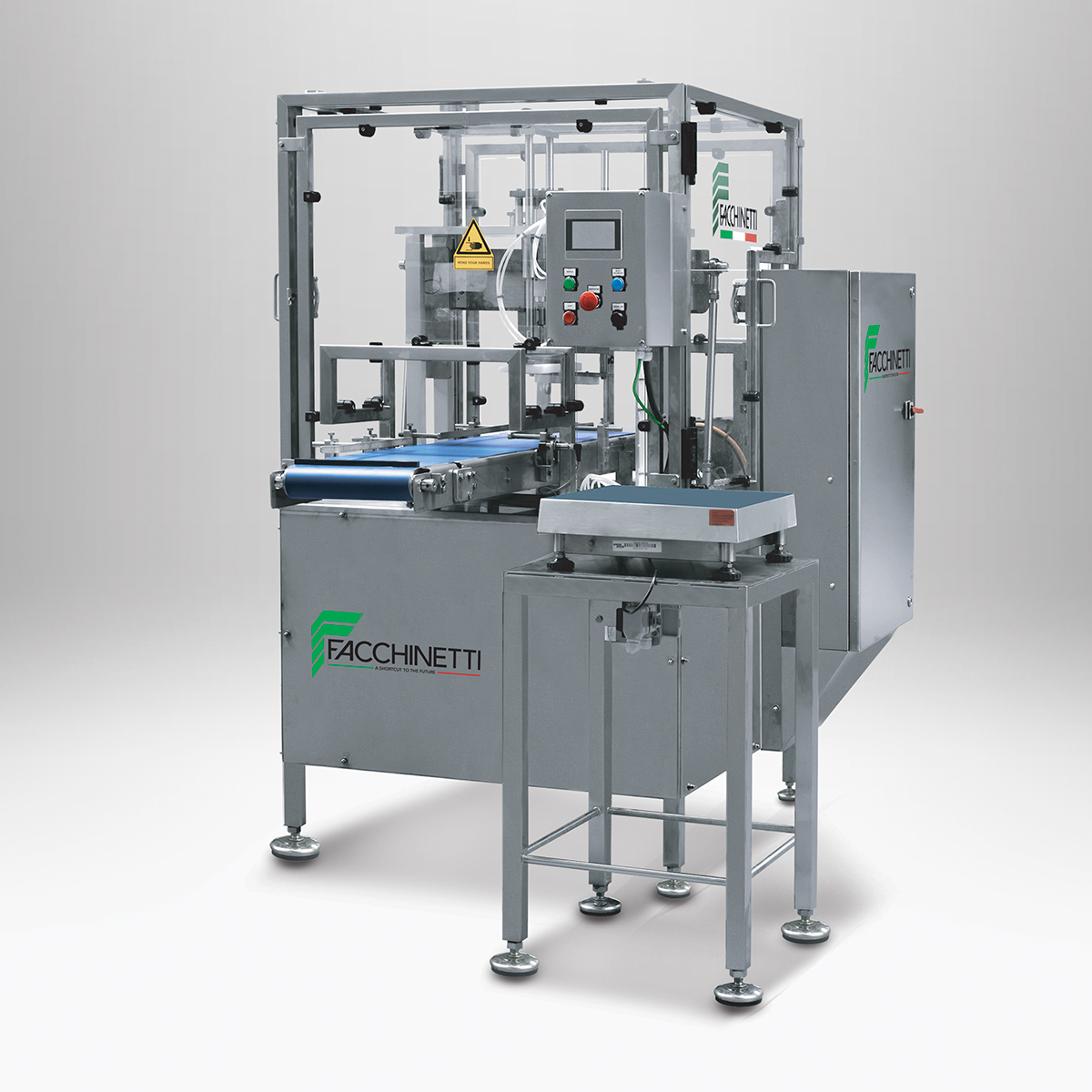
Our ongoing commitment to innovation and sustainability drives us to create more energy and operationally efficient machines, resulting in lower costs and an environmental benefit. An important step in this direction is the evolution of the TXF03, a semi-automatic block-slicing machine, which achieves a productivity of about 45 slices/min.
The Energy Transformation
Our research and development team revised TXF03 with the aim of reducing power consumption and improving yields. The TXF03, in its earlier versions, used both pneumatic and electric drives. Specifically, the product press was driven by a pneumatic cylinder, a solution that requires an energy conversion process: first electricity is converted into compressed air, which in turn drives the movement of the press. Although functional, this process was not optimal in terms of energy efficiency, as unnecessary transitions between different forms of energy generate losses. We therefore introduced an electric cylinder that could replace the work done by the pneumatic cylinder. This modification made it possible to eliminate an energy conversion step, going directly from electricity to motion. The result? A 40 percent reduction in consumption, with obvious economic benefits. Not only energy savings, but also a significant improvement in machine operation. The elimination of the pneumatic cylinder has eliminated components such as the air filter, valves and hoses, making the machine simpler, reducing maintenance and making cleaning easier. In addition, customers who do not have compressed air do not need to purchase a compressor, while those who already have a compressor reduce its use, benefiting operating costs in terms of both energy consumption and maintenance.
Efficiency in Yields
Overhauling the press drive provided an opportunity to redesign its shape and modify the product feed under the blade. This improvement, combined with the introduction of a high-efficiency brushless motor, increased the productivity and precision of the machine, improving its performance in terms of yield.
Conclusions
With the TXF03, we have succeeded in combining technological innovation with respect for the environment, creating a machine that not only runs more efficiently and economically, but also contributes to a greener future. We are proud to continue to pursue the goal of reducing the environmental impact of our machinery, with solutions that bring tangible benefits in terms of cost savings.